Why Your Name Address and Phone Number Must Match Everywhere
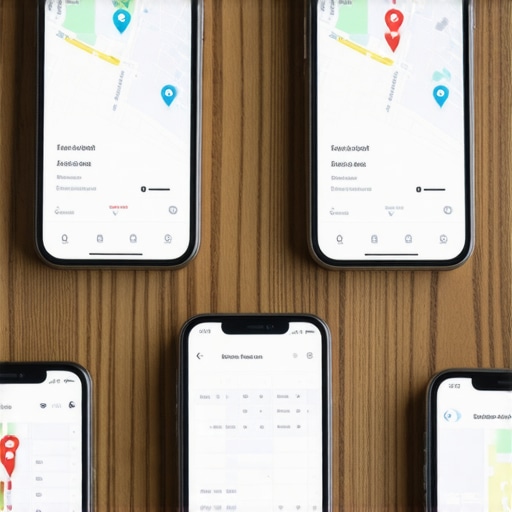
I walk the streets of downtown looking for the subtle glitches. The smell of wet concrete after a summer storm hits me as I stare at a storefront window. On the glass, the phone number ends in 4455, but the digital shadow of this business on a mobile screen says 4456. To most, this is a typo. To me, it is a signal of impending death in the local algorithm. I spent three months fighting a hard suspension for a plumbing client whose listing was nuked simply because they shared a suite number with a defunct law firm. Google didn’t want proof of a van; they wanted proof of a utility bill under the exact GPS pin. They wanted to see the reality match the data. The pin moved, and the revenue vanished. Local SEO is not about keywords. It is about the forensic verification of physical existence.
The ghost in the GPS coordinates
Google Business Profile relies on NAP consistency to verify that a local business occupies a specific latitude and longitude. When Name, Address, and Phone number data fluctuates across citations, the local algorithm loses trust, triggering ranking drops or account suspensions within the Map Pack ecosystem. The search engine is a machine that fears ambiguity. If your listing on a niche directory says ‘Street’ and your profile says ‘St’, you have introduced a micro-fracture in your authority. It sounds insane. It is. But this is how the machine sorts the legitimate from the spam. I have seen companies spend thousands on the ultimate local seo course only to fail because their suite number was omitted on a local chamber of commerce page.
Why your physical address is a liability
Physical proximity is the strongest ranking factor in Google Maps, but an inconsistent address makes your location a negative signal. Google uses spatial data to determine if you are the best local search result for a user. Mismatched data creates service area confusion and kills Map Pack visibility. Your address is a set of coordinates, not just a place where you receive mail. If you change your location, you must follow an address change survival strategy. The algorithm compares your stated location against years of historical data. It checks the post office records. It checks the power company. It checks the citations you forgot you built in 2014. If the data does not align, you are filtered out. You become a ghost.
“Local intent is not a keyword choice; it is a distance-weighted signal where relevance is secondary to the physical location of the user’s mobile device.” – Map Search Fundamental
The three mile radius that determines your revenue
Hyperlocal search results are governed by a centroid, which is the geographic center of a search area. NAP matching ensures your business is correctly anchored to this centroid, allowing you to capture local leads within a three mile radius. Outside of this, proximity bias takes over. If your phone number is an old 800 number on one site and a local 555 number on another, Google cannot verify your local presence. This is why some service area business secrets revolve around the precision of your service polygons. You must be where you say you are. The machine looks for the local area code as a trust signal. It looks for the ZIP+4 code to pinpoint your desk.
Local Authority Reading List
- Cleaning up the Map Pack
- The foundation of citation consistency
- Auditing multi-location strategies
- Fighting competitor spam
How to survive the forensic audit of your digital footprint
Local SEO audits must identify every duplicate listing and incorrect NAP entry across the local search ecosystem. To normalize rankings, you must use GMB audit tools to find and merge fragmented data. This process protects your organic trust score and prevents manual penalties. Most business owners think they are safe until they see the red flags of a suspension. I have audited profiles where a ‘keyword stuffed’ name edit led to a total wipeout of years of reviews. If you are trying to clean up mixed language listings, you are performing digital surgery. Every character matters. The machine reads the raw HTML, not just what is on the screen.
The hidden math of local search consistency
Algorithm updates like Vicinity and Opossum weight data integrity higher than backlink volume for Map Pack positioning. A single mismatched phone number can reduce your local justification triggers, causing you to lose impressions to competitors with inferior services but superior NAP alignment. The math is brutal. It calculates the percentage of consistent mentions across the top 50 local directories. If you fall below a 90 percent consistency threshold, your local authority takes a hit. You might wonder why your profile is hidden despite being fully optimized. The answer is usually buried in a legacy citation from a defunct yellow pages site.
“Consistency in structured data is the primary bridge between a physical entity and its digital representation in the Knowledge Graph.” – Location Intelligence Whitepaper
Why big data hates your small variations
Semantic search engines aggregate LocalBusiness Schema and third-party reviews to build a confidence score for your business. When your NAP data is messy, the confidence score drops, and AI Overviews will cite your competitors instead of you. The GMB vs local listing tools comparison often overlooks the fact that no tool can fix a fundamentally broken business identity. You need to fix broken citations manually. Tools are for monitoring; human eyes are for the audit. In 2026, the image metadata from photos taken at your location will be even more vital, but it still relies on the base NAP anchor. If the foundation is cracked, the house falls. You cannot build local E-E-A-T on a bed of lies or typos. Stop looking for cheap seo services that offer bulk blasts. They will only create more ghosts for you to hunt later.