The Secret Map-Rank Component Most City Landing Pages Are Missing
The Secret Map-Rank Component Most City Landing Pages Are Missing
If you are currently ranking at the top of the organic search results for your primary “service + city” keywords but find yourself completely invisible in the local Map Pack, you are not alone. For years, the SEO industry has preached a standard gospel: build a city page, sprinkle some keywords, ensure your NAP (Name, Address, Phone) is consistent, and wait for the leads to roll in. But in the wake of the March 2026 Core Update, that strategy isn’t just outdated – it’s a liability. To achieve true google business profile seo success today, you have to look beyond the text on the page. The missing link isn’t a better meta description or more backlinks; it is Hyperlocal Interaction Proof. Proximity is no longer just a measurement of physical distance from a searcher to an office; it is now a measurement of your business’s interaction footprint within a specific geographic entity.
The “City Page” Trap: Why Your 2024 Strategy Fails in 2026
Old-school SEO tactics are dying a slow, painful death. For a decade, the “City Landing Page” was a staple of local search optimization. You’d create a template, swap “Plumber in Dallas” for “Plumber in Plano,” and expect Google to treat both pages with equal weight. Following the March 2026 Core Update, Google’s algorithm has become ruthlessly efficient at identifying “thin” location-based content. If your city page is merely a mirror of your homepage with a different city name in the H1, you are falling into the City Page Trap.
Google’s 2026 ranking dynamics have shifted heavily toward “Review Signals and Rating Quality” and “Authority Signals.” The search engine now evaluates whether a business actually *operates* in a city based on more than just a mention on a website. It looks for google business profile optimization that reflects real-world activity. When a page offers no unique value, no local case studies, and no evidence of service in that specific area, Google devalues the page organically and, more importantly, refuses to trigger the Map Pack for that location. This is why you see competitors with fewer reviews and worse websites outranking you; they aren’t just “relevant” – they are geographically validated.
Traditional local seo for contractors and service-area businesses relied on the idea that a service area defined in the GBP dashboard was enough. It isn’t. Google now requires “Entity-Based Proximity Validation.” If you want to rank google business profile listings in a city where you don’t have a physical office, your city page must act as a bridge of interaction proof between the user and your GBP entity.
The Missing Component: Hyperlocal Interaction Proof
The “Secret Component” that separates the winners from the losers in 2026 is Hyperlocal Interaction Proof. This is behavioral data that proves to Google that users in a specific city are interacting with your brand in a meaningful way. Google tracks “Interaction Gaps” – the discrepancy between how many people see your listing and how many people actually take an action (click, call, or request directions) from a specific geographic coordinate.
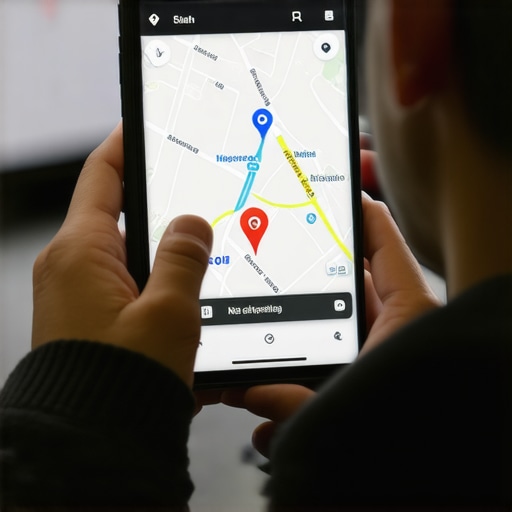
To rank higher on google maps, your city landing page must be designed to trigger these behavioral signals. This involves moving away from static information and moving toward “Entity-Based Proximity.” When a user lands on your Plano city page, are they prompted to view a map of recent projects in Plano? Are they encouraged to click a “Request Directions to Our Nearest Service Vehicle” button? These clicks provide Google with the data it needs to validate your presence in that city. Without these signals, Google assumes your city page is a ghost town, and your Map Pack rankings will remain stagnant.
To accurately measure these gaps, savvy professionals are turning to advanced local seo ranking tools. These tools allow you to see where your interaction signals are dropping off and which geographic “cells” are lacking the necessary behavioral proof to push you into the Top 3. If you aren’t tracking how users from specific neighborhoods are interacting with your profile, you are flying blind in a data-driven era.
Beyond NAP: The 2026 Local Ranking System
The three pillars of local search – Relevance, Distance, and Prominence – still exist, but their definitions have been radically overhauled. In 2026, google business profile optimization is less about keyword stuffing your description and more about “User Path Signals.”
- Relevance: This is no longer just about keywords. It’s about “Entity Association.” Does your city page link to local landmarks, local news, or local government entities? Google uses these to place you within the local entity graph.
- Distance: This has evolved into “Interaction Proximity.” If users in a specific suburb consistently engage with your GBP posts or photos, Google will expand your “ranking bubble” into that suburb, even if your office is 20 miles away.
- Prominence: This is now driven by “Verified Video Signals.” Businesses that upload geo-tagged video content of their work in specific neighborhoods are seeing a massive spike in google business ranking.
Old school SEOs are still chasing citations like it’s 2015. While citations still matter for foundational trust, they are now secondary to the real-time interaction data Google collects from mobile devices. If you want to stay ahead, you need to ask: Is Your Local SEO Framework Ready for 2026 User Path Signals? If your answer is “I’m still focusing on my NAP consistency,” you’ve already lost the race.
Technical Execution: Maps Embeds and Hyperlocal Schema
Building a city page that actually moves the needle requires a technical approach to google maps marketing. You cannot just paste a standard Google Maps iframe and call it a day. You need a Specific Maps Embed Strategy that actively encourages user engagement.
Instead of a static map of your office, embed a map that shows a “Service Route” or a cluster of “Recent Local Projects.” This encourages users to interact with the map – zooming in, clicking markers, and potentially hitting the “Directions” button. Each of these interactions is a high-weight signal that tells Google your business is a prominent entity in that specific city. Using high-quality google maps seo tools can help you generate these specialized embeds and track the resulting engagement metrics.
Furthermore, your Schema markup needs to be hyper-specific. Standard “LocalBusiness” schema is the bare minimum. To truly dominate, you should be using “AreaServed” property within your schema to link your city page directly to your Google Business Profile CID. This creates a hard-coded link in the Knowledge Graph between your website’s city-specific content and your Map Pack entity. For more details on this, see The Simple Schema Fix That Helps Contractors Win the Map Pack. This technical bridge ensures that the authority you build on your city page flows directly into your google maps ranking service efforts.
Industry-Specific Application: From Contractors to Med Spas
The application of Hyperlocal Interaction Proof varies by industry, but the core principle remains: prove you are there. For local seo for contractors, this means including “Geo-specific case studies.” A plumber shouldn’t just list “Leaky Pipe Repair” on their city page; they should feature “Leaky Pipe Repair in the Highlands Neighborhood,” complete with a photo of the house and a brief description of the local architecture. This anchors the content to a specific geographic entity.
For high-competition niches like medical aesthetics, the strategy is even more aggressive. We are seeing How Med Spas Are Stealing Local Patient Bookings From High-Budget Clinics by using “Hyperlocal Q&A” sections on their city pages. By answering questions specifically about parking near their suburban satellite locations or local city ordinances, they are capturing “User Path Signals” that broader, city-wide pages miss. This level of local map pack seo is what separates a business that gets occasional calls from one that dominates the entire region.
Whether you are a roofer or a lawyer, the goal is to reduce the “Interaction Gap.” If a user searches for your service in their town, finds your city page, but then has to search again to find your phone number or directions, you have failed. The city page must be the start and end of the local conversion funnel.
Conclusion: Auditing Your Way to the Top 3
The “Secret” to ranking in the Map Pack in 2026 isn’t a secret at all – it’s just a shift from static content to interactive local signals. The days of set-it-and-forget-it city pages are over. If you want to rank google business profile listings effectively, you must treat every city landing page as a live hub for local interaction. You need to provide Interaction Proof, validate your Entity-Based Proximity, and leverage User Path Signals to show Google you are the most prominent and relevant choice for the searcher.
If your rankings have stalled, it is time for a deep dive. You need to identify where your interaction signals are failing and where your entity graph has holes. I highly recommend using a comprehensive google business profile audit tool to benchmark your current performance against the 2026 standards. Stop guessing why your competitors are outranking you and start using the data to force your way into the Top 3. For a step-by-step guide on identifying these issues, check out how to Fix Your Google Business Ranking with This 2026 Signal Audit. The map is changing; make sure you have the right coordinates to win.