The Google Maps Ranking Checklist for Profiles Stuck in the Fourth Spot
The Google Maps Ranking Checklist for Profiles Stuck in the Fourth Spot: Mastering Google Business Profile SEO
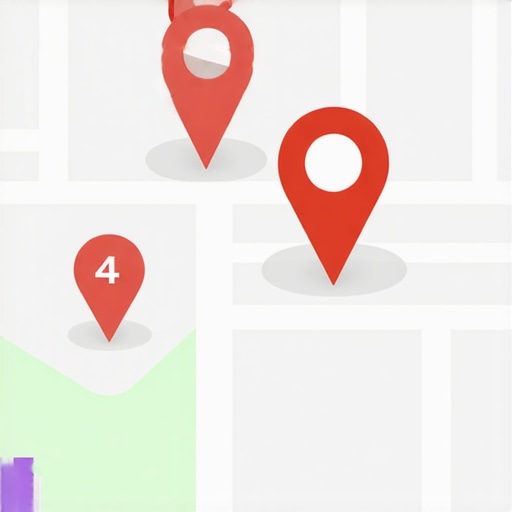
If your business is currently sitting in the fourth position on Google Maps, you are living in a state of digital purgatory. As a Google Business Profile (GBP) Product Expert, I see this daily: a well-optimized profile that generates impressions but fails to convert them into phone calls or direction requests. The reason is simple – the “Map Pack” only displays the Top 3 results. To see your business at #4, a user must click “View All,” a barrier that results in a massive drop-off in engagement. To break this ceiling, you need a sophisticated approach to google business profile seo that moves beyond basic NAP (Name, Address, Phone) consistency and dives into technical entity building and behavioral signal manipulation.
Section 1: The “Fourth Spot” Purgatory
In the world of local search, there is no place more frustrating than the fourth spot. You are technically “on the first page” of the search results, but you are invisible to the 70-80% of users who never click past the initial Map Pack interface. Research indicates that the Top 3 positions capture the lion’s share of local intent traffic. Position #4 is the first loser; it’s the ghost spot where high-potential businesses go to die because they are just one algorithmic nudge away from dominance.
Why does this happen? Often, it is because your profile is “good enough” to be relevant, but lacks the “prominence” or “behavioral validation” required to unseat an incumbent. This is a common hurdle I address in my guide on Why Your Google Business Ranking Is Stuck at #4 [2026 Fix]. To move from #4 to #1, you cannot simply do more of the same. You must identify the specific friction points – whether they are proximity biases or infrastructure gaps – that are holding your entity back in the Knowledge Graph.
Section 2: The Proximity Paradox & Distance Bias
One of the most significant challenges in 2026 local SEO is the “Proximity Paradox.” This phenomenon, widely documented in recent search research, suggests that while Google prioritizes proximity (how close the business is to the searcher), it often creates a “distance bias” that can keep superior businesses hidden if they are just a few blocks outside a specific search radius. However, the paradox lies in the fact that Google will override proximity if your “Relevance” and “Prominence” scores are high enough.
You cannot move your physical office, but you can expand your “relevance radius.” This is achieved by building localized content that signals to Google that your business is the authoritative choice for a wider geographic area. Utilizing a google maps ranking booster can help you visualize where your ranking drops off and identify which neighborhoods require more localized entity signals. By shifting the focus from “where we are” to “what we influence,” you can mitigate the proximity filter. If you want to rank higher on google maps, you must prove to the algorithm that your business is worth the extra two-minute drive for the consumer. This requires a shift from simple directory listings to complex entity building within the local ecosystem.
Section 3: The Infrastructure of Relevance: Technical Google Business Profile Optimization
To rank google business profile assets effectively in 2026, you must treat your GBP as technical infrastructure rather than a social media profile. Drawing from the “SEO as infrastructure” philosophy pioneered by experts like Rashid Rehman, we must look at the underlying data structures that define your business entity. Many profiles are stuck at #4 because of “Hidden Schema Errors” or poor category nesting.
Category Nesting and Service Menus: Google’s AI now uses deep learning to understand the relationship between your primary category and your service menu. If your primary category is “Plumber” but your service menu is cluttered with unrelated “Handyman” tasks without proper nesting, you dilute your relevance. In 2026, AI-driven sentiment analysis of reviews and structured FAQ content are core relevance signals. You must ensure that your “Services” section utilizes long-tail keywords that mirror how users actually speak. For example, instead of just “Roofing,” use “Emergency Hail Damage Roof Repair.”
Furthermore, your website’s local schema must perfectly mirror your GBP. A common reason for stagnation is a mismatch between the LocalBusiness schema on your landing page and the data points on your Google profile. If Google detects even a slight discrepancy in how your services are structured, it will default to the “safer” Top 3 choices, leaving you at #4. To diagnose these issues, a google business profile optimization audit is essential to ensure your technical foundation is unshakeable. You can also utilize The Audit Checklist for Profiles Stuck Outside the Top 3 to identify these infrastructure gaps.
Section 4: Prominence & The Authority Gap
Prominence is the most misunderstood pillar of local seo ranking factors. Many business owners believe that having the most reviews will automatically grant them the #1 spot. This is a fallacy. I have seen profiles with 50 reviews outrank those with 500 because the former possessed superior “Entity Authority.” This authority is built through niche citations and local backlinks that have high geographic relevance.
Generic citations on sites like Yellow Pages are now baseline requirements, not competitive advantages. To break into the Top 3, you need high-quality local mentions – think sponsorships of local little league teams with a link from their .org site, or mentions in local news outlets. These signals tell Google that your business is a pillar of the community. Using SEO Viper Tools can help you identify the backlink profiles of your competitors in the Top 3, allowing you to bridge the authority gap. Remember, it’s not just about the quantity of links, but the “Local Saliency” of those links. For a deeper look at why reviews aren’t the only factor, see The 3 Ranking Signals That Actually Matter More Than Your Review Count.
Section 5: Behavioral Signals: The 2026 Interaction Test
By 2026, Google has shifted heavily toward behavioral signals to determine the final order of the Map Pack. Google tracks what happens after a user sees your profile. This includes Click-Through Rate (CTR), “Dwell Time” (how long someone spends reading your reviews or looking at photos), and, most importantly, “Direction Requests” and “Click-to-Calls.” If your profile is at #4 and has a lower interaction rate than the profile at #3, Google has no incentive to move you up.
To trigger these signals, you must use google business profile seo to make your listing more “clickable.” This involves high-resolution, professionally shot photos and a compelling “From the Business” description that uses a “hook” in the first 80 characters. You want to encourage “meaningful interactions.” For instance, responding to every review with a thoughtful, keyword-rich answer can increase dwell time. If you notice a high impression count but low engagement, you are likely suffering from The Interaction Gap Killing Your Local Ranking System Clicks. Improving these micro-conversions is often the final “nudge” needed to jump from #4 to the Top 3.
Section 6: The 10-Point “Breakout” Checklist
If you are ready to stop being the “first loser” and start dominating the Map Pack, follow this technical google maps ranking checklist to audit and refine your profile:
- Audit Primary/Secondary Categories: Ensure your primary category is the one with the highest search volume and that secondary categories do not conflict or dilute your core relevance.
- Fix NAP Consistency: Use a local seo tools suite like local seo tools to ensure your Name, Address, and Phone number are identical across the web.
- Optimize Images with EXIF Data: While Google may strip some metadata, including geo-coordinates in your original image files before uploading remains a best practice for signaling geographic intent.
- Update “Services” with Long-Tail Keywords: Don’t just list services; describe them using the exact phrases your customers use.
- Implement a Strategic Maps Embed: Use The Specific Maps Embed Strategy That Actually Drives Direction Requests on your contact page to bridge the gap between your website and your GBP.
- Prune Low-Quality Citations: Remove or update outdated listings that might be confusing the Knowledge Graph.
- Maximize Review Velocity: It’s not just the total count; it’s how frequently you get new reviews. Aim for a steady stream rather than a sudden burst.
- Leverage Google Posts: Treat these like “micro-blogs” to keep your profile active and signal to Google that the business is operational and engaged.
- Enable Messaging: Faster response times can lead to better behavioral scores and higher conversion rates.
- Entity Link Building: Secure 3-5 high-quality, locally relevant backlinks per month to build your prominence score.
Section 7: Conclusion & CTA
Breaking out of the #4 spot requires a transition from “basic optimization” to “aggressive authority building.” In the competitive landscape of 2026, simply having a complete profile is the bare minimum. You must master the technical nuances of local map pack seo, address the Proximity Paradox, and dominate behavioral signals to prove you belong in the Top 3. For a comprehensive strategy, I recommend Unlocking the Local SEO Blueprint for Dominating Google Rankings. If you’re ready to see exactly where your profile stands, use a professional google business profile audit tool or visit SEO Viper today to start your journey to the #1 spot.