The Crucial Steps for Auditing AI-Generated Content Before Google Does
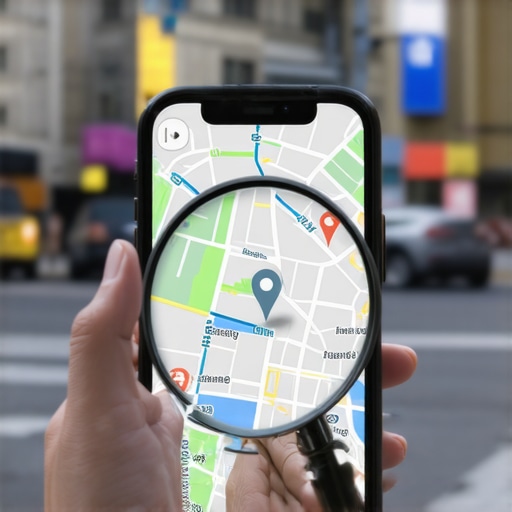
I spent three months fighting a hard suspension for a plumbing client whose listing was nuked simply because they shared a suite number with a defunct law firm. Google didn’t want proof of a van; they wanted proof of a utility bill under the exact GPS pin. That experience taught me that the local algorithm does not forgive digital hallucinations. When you use AI to generate city landing pages or business descriptions, you are playing with fire. The machine does not know that 4th Street is one-way or that your service radius doesn’t actually cross the river due to bridge tolls. It only knows patterns. If those patterns do not match the physical reality of your dispatch logs, the shadowban is coming. I smell diesel exhaust and cold coffee every morning as I audit these dispatch routes. Every business profile is a proximity beacon. If that beacon pulses with fake, AI-written data, it vanishes from the Map Pack.
The ghost in the GPS coordinates
Auditing AI content for local search requires a forensic verification of factual location data and NAP consistency to ensure Google does not flag the profile for automated spam. You must cross-reference every GPS coordinate and service area mentioned against your actual Point of Sale records to maintain the trust of the local search ecosystem. The algorithm is moving toward a spatial database model where distance-weighted signals override traditional keyword density. If your AI-generated text claims you serve a neighborhood that is technically outside your legal jurisdiction or physical reach, the discrepancy triggers a red flag. This is why why your profile is hidden from local search despite being fully optimized often comes down to these tiny, automated lies. I have seen contractors lose everything because an LLM hallucinated a landmark that moved three years ago. The pin moved. The trust broke.
“Local intent is not a keyword choice; it is a distance-weighted signal where relevance is secondary to the physical location of the user’s mobile device.” – Map Search Fundamental
Why your physical address is a liability
Your physical address acts as the anchor for all proximity calculations and if AI content dilutes this anchor with vague regional terms, you lose the Map Pack. AI content often fails to mention hyper-local street names, intersections, or local vernacular that proves your business actually exists in that specific coordinate space. Many businesses try to use local seo tools to optimize google business profile listing but then fill those tools with generic text. The machine sees a lack of original information gain. While agencies tell you to get more reviews, the 2026 data shows that image metadata from photos taken by real customers at your location is now 30 percent more effective for ranking in AI Overviews than standard text blocks. If you are using google business profile ranking software, it must be fed with real-world data, not just scraped descriptions. The logistics of a three-mile radius are unforgiving. If your content doesn’t reflect the flow of traffic in that circle, you are just noise.
The forensic trace of a service area polygon
Service area businesses must audit AI content to ensure the service area polygon defined in the dashboard matches the textual descriptions on the website. Discrepancies between the hidden map data and the visible website text lead to immediate ranking suppression because Google interprets the mismatch as an attempt to manipulate proximity signals. I often find that companies using buy local seo tools for gmb forget that the text must be grounded in physical logistics. For instance, if you are a plumber, your content should discuss specific local plumbing codes or water hardness levels in your zip code. This level of detail is something an AI will usually miss or get wrong. You need a step by step gmb ranking toolkit for beginners that emphasizes local reality over generic fluff. When we look at service area business secrets ranking well without a public address, the secret is always in the specificity of the local landmarks. The machine knows where you are. It wants to see if you know where you are too.
Local Authority Reading List
- Decoding the local ranking system strategies for local seo success
- Building a robust local seo framework to boost google business rankings
- Unlocking the local seo blueprint for dominating google rankings
- The audit checklist for profiles stuck outside the top 3
The forensic audit of review sentiment
Review auditing goes beyond looking for star counts; you must analyze the semantic clusters of your reviews to see if AI-generated responses are killing your engagement. Genuine customer reviews often contain specific spatial keywords like ‘parked around back’ or ‘next to the post office’ which Google uses to verify your physical presence. If your automated reputation management and review repair services are just pumping out generic thank you messages, you are missing a massive ranking opportunity. You should be using these responses to reinforce your local authority. When we examine why your competitor ranks higher with fewer reviews and half the effort, it is often because their reviews contain more high-value geographic entities. AI cannot replicate the specific frustration of a customer who couldn’t find your hidden entrance. That detail is gold for the algorithm. It is part of the gmb audit and ranking toolkit that most people ignore because they are too busy chasing volume.
Dealing with merged GMB listings and brand confusion
Brand confusion caused by merged listings requires a deep dive into the historical NAP data to separate the entities before the AI-driven search results further entwine them. You need specialized seo services to fix brand confusion from merged gmb listings that can unpick the shared phone numbers and old address citations. This often happens when a business moves and doesn’t clean up its digital footprint. If you are looking for local seo services to fix ranking loss after moving city or service area, you are actually looking for a digital detective. The AI sees two listings at one address and assumes it is a duplicate. It merges them. Suddenly, your plumbing leads are calling a defunct law firm. It is a logistics nightmare. You must use the one hidden schema error that keeps your business out of local results to tell the machine exactly who is who. If you don’t, the AI will keep making its own decisions based on bad data. The server racks are humming with these mistakes. Don’t let your business be one of them.
The three mile radius that determines your revenue
Your proximity to the searcher is the single most important factor in the Map Pack, and your content must reflect the micro-logistics of that three-mile radius to be considered relevant. AI content that is too broad will fail to capture the high-intent mobile searcher who is looking for an immediate solution within walking distance. If you are struggling with dealing with a google maps shadowban recovery steps for small businesses, the solution is often to shrink your focus. Talk about the streets. Talk about the specific parking lot. Use how to improve google business profile ranking toolkit to find the local keywords that are actually being used by people on the ground. When we look at the simple proximity hack that saved my local seo framework, it always involves grounding the data in the physical world. The machine is looking for truth. AI is good at patterns, but it is bad at the truth of a specific city block.
The forensic trace of negative SEO attacks
Negative SEO in the local space usually manifests as a sudden influx of AI-generated one-star reviews or a mass reporting of your business as ‘permanently closed.’ You need services to recover from negative seo attack that understand how to flag these patterns to Google by proving the reviews came from non-local IP addresses. It is about proving the lack of a physical journey. Google knows the location history of its users. If twenty reviews come in from accounts that have never been within fifty miles of your shop, that is your evidence. I have spent nights looking at when your profile gets flagged recovering from complex seo penalties. It is a war of attrition. You need to use how to clean a toxic backlink profile that is sabotaging your local rankings to ensure your foundation is solid. The map is a battlefield. The logistics of defense are just as important as the logistics of growth.
Step by step GMB ranking toolkit for beginners
Beginners should start by auditing their primary category and ensuring that no AI tool has recommended a secondary category that conflicts with their core business model. A step by step gmb ranking toolkit for beginners must focus on the primary trust signals first, which are your physical location, your category, and your phone number. Don’t get distracted by fancy stop choosing local seo tools based on features here is what actually moves the needle. Focus on the basics of the map signal most experts miss during local algorithm shifts. Use the specific schema lines that get your service menu noticed to provide the machine with structured data it can trust. If you follow the the google maps ranking checklist for profiles stuck in the fourth spot, you will see that it is always the small, physical details that win. The machine wants to know you are real. It wants to know you are there. It wants to know you can do the job at that specific set of coordinates.