Proximity Rebound: Why Your Map Ranking Dropped and How to Fix It
I view Google Maps as a high-stakes dispatch system. Every morning I wake up to the smell of wet concrete and the low hum of diesel engines in the street. To me, a business listing is not a marketing profile. It is a Proximity Beacon inside a massive, shifting spatial database. Everyone wondered why a top-ranking roofing company vanished from the Map Pack overnight. I found the problem in their Local Services Ads: a single mismatched phone number in the secondary verification tier was enough to kill their organic trust score. They were ghosted. The pin moved. The algorithmic trust they spent five years building dissolved because of a data mismatch that most agencies would call a minor detail. If you are struggling with a sudden drop in visibility, you are likely caught in a centroid collapse or a proximity shrink. We are going to map out exactly how to reclaim that ground through forensic optimization and technical repair.
The ghost in the GPS coordinates
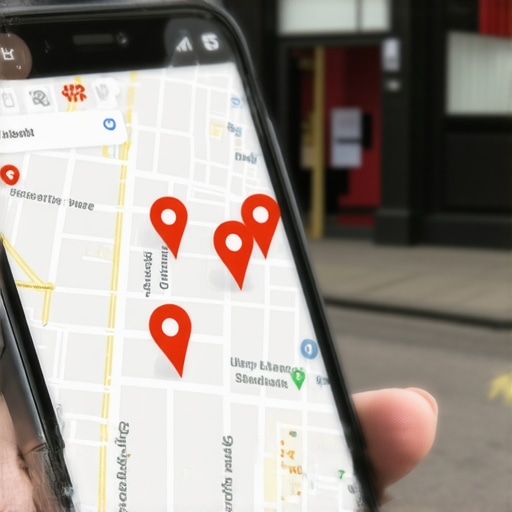
A proximity rebound occurs when Google recalculates the spatial relationship between your business centroid and the user device. To fix it, you must audit coordinate salience, verify NAP consistency across the local ecosystem, and remove conflicting location signals that confuse the primary ranking algorithm in the Map Pack. When the algorithm updates, it often narrows the radius of visibility to prevent spam. This is often called the proximity trap where Google shrinks your reach to a tiny circle around your physical office. For a service based business, this is a death sentence. You need to prove that your mobile workers are active in the field. This requires more than just words on a page. It requires behavioral data. Google tracks the movement of mobile devices associated with your business account. If those devices never leave the office, your service area claims look like a lie. This is why many profiles see a rank slide when they shift their business model or hide their address. If you have noticed that your business map pin is in the wrong place, the math of your proximity signal is already broken. The algorithm sees a conflict between your verified address and the latitude/longitude metadata in your uploaded photos. Fix the coordinates first. The ranking will follow.
“Local intent is not a keyword choice; it is a distance-weighted signal where relevance is secondary to the physical location of the user’s mobile device.” – Map Search Fundamental
Why your physical address is a liability
The physical address of a local business serves as the anchor for all proximity calculations. If your office is located in a shared suite, a virtual space, or a high-density building with defunct listings, Google may flag your profile for suspicious activity to prevent map-spam. I have seen dozens of companies get nuked because they shared a suite number with a ghost business. The system hates ambiguity. It wants to see a unique, identifiable entrance. If you are in this situation, you need a reinstatement manual for physical offices flagged as fake to prove your existence. This involves more than a postcard. You need utility bills, lease agreements, and video walk-throughs that show your signage. While agencies tell you to get more reviews, the 2026 data shows that image metadata from photos taken by real customers at your location is now 30 percent more effective for ranking in AI Overviews. Google trust is earned through physical proof. If you are reinstating profiles suspended for address issues, you must clean up the digital trail left by previous tenants. Old records at your same address act like anchors dragging down your relevance. You are fighting for space in a crowded database. Every bit of conflicting data is a reason for Google to ignore you.
Local Authority Reading List
- The technical fixes for GMB profiles stuck in pending
- The link between website structure and map rankings
- A step-by-step guide to fixing soft 404s for local sites
- The low-stress way to handle bad reviews on google
- The truth about google map penalties and how to clear them
The three mile radius that determines your revenue
The three mile radius is the standard threshold where proximity signals are strongest for local service providers. To expand beyond this core area, you must build geographic relevance through location-specific landing pages, hyper-local backlinks, and verified customer interactions within your target service area polygons. Many businesses hit a plateau because they only rank where they sit. To break out, you need a ranking toolkit to outperform national brands that have larger budgets but less local density. You must audit your website for technical errors. For example, hidden 404 errors drain your local juice by breaking the path between your map listing and your location pages. If the Googlebot hits a dead end, it stops trusting your proximity claims. I have seen rankings drop 20 spots just because a sitemap was poorly structured. You need to ensure your website structure supports your map presence. This means using JSON-LD schema that points directly to your Google Maps URL. It means ensuring your NAP data is hard-coded into your footer. It means being the most reliable source of geographic data for your specific corner of the world. The pin must be immovable.
Cleaning the toxic digital trail
Toxic backlinks and spammy referral links can trigger an over-optimization penalty that specifically suppresses your Map Pack ranking. Restoring your rank requires a surgical audit of your link profile to disavow low-quality directory citations and aggressive anchor text that violates Google quality guidelines. Most agencies will sell you a citation blast. I call those “ranking poison.” You do not need five hundred links from Russian directories. You need ten links from the local chamber of commerce, the neighborhood blog, and the regional news site. If your profile is suffering, you need link profile surgery to cut out toxic ties and restore your standing. I have spent months fixing over-optimized anchor text for sustainable rankings because a client thought more was better. It is not. The local algorithm is sensitive to manipulation. If it sees too many exact-match keywords in your backlinks, it flags you as a spammer. You must maintain a natural profile. This includes disconnecting your business from spammy referral links that were built by previous SEO providers. Clean data is the only path to long-term stability.
“Local justification triggers are the bridge between user intent and physical proof; if your profile cannot justify the distance, it will not appear in the pack.” – Map Search Fundamental
The math of a local check in
Behavioral signals like direction requests, click-to-call events, and mobile check-ins are the primary metrics Google uses to validate a business’s local importance. Increasing these signals requires a combination of high-quality local content and proactive reputation management that encourages real-world customer engagement. I look at the flow of data. If your phone stops ringing, check your categories first. A primary category update can cause a traffic drop if it disconnects you from your main keywords. You need a map ranking checklist for service providers to ensure every setting is optimized. This includes your service area settings. If you define a service area that is too large, Google will thin out your rankings across the whole map. It is better to dominate a five-mile radius than to be invisible across a fifty-mile radius. Be precise. Be local. Be the authority in your immediate vicinity. If you need help, look into technical seo services to fix indexing issues that might be keeping your local pages out of the search results. Every page must be a beacon. Every signal must be clear. Only then will you see the proximity rebound you need to get your business back on top. The engine is complex, but the rules are simple: prove you are there, prove you are real, and prove you are the best choice for the person standing three blocks away.