The Invisible Business: How to Restore Impressions After Hiding Your Street Address
The ghost in the GPS coordinates
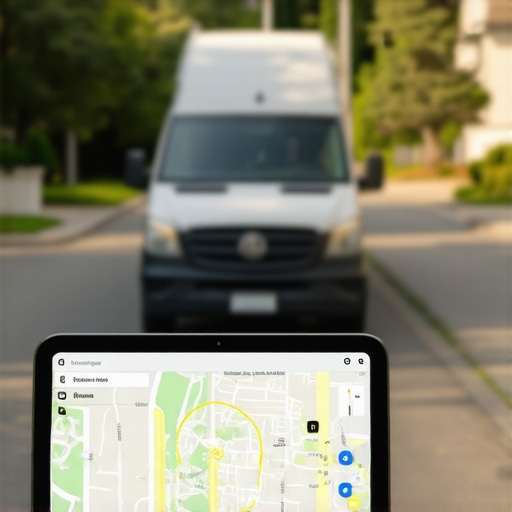
Hiding your street address on Google effectively transforms your physical location into a service area business (SAB) polygon, which changes how the proximity algorithm calculates your ranking weight. When a storefront address is removed, the local search engine loses a fixed anchor and relies instead on the centroid of your service area to determine relevance. This often results in a massive drop in impressions because the engine struggles to verify your actual presence without a public pin. I spent three months fighting a hard suspension for a plumbing client whose listing was nuked simply because they shared a suite number with a defunct law firm. Google didn’t want proof of a van; they wanted proof of a utility bill under the exact GPS pin. This battle taught me that the logic of the local map is less about the address and more about the verified flow of your service personnel. If you want to understand how this works, you should check out the ultimate local SEO course to see how visibility is actually constructed. The air in my office always smells like fresh tires and the exhaust of a dispatch fleet. I see every Google Business Profile as a vehicle in a massive logistics queue. If your truck is not visible, you are not earning. A business with a hidden address must work twice as hard to establish trust signals that the algorithm can ingest. This is why building a robust local SEO framework is the only way to survive the transition from storefront to service area provider. You are no longer a point on a map; you are a service boundary.
Why your physical address is a liability
A hidden business address often triggers a manual review or a hard suspension because Google prioritizes the safety of the user experience over the privacy of the merchant. When you toggle the address visibility off, you are essentially telling the system that you do not have a permanent office where customers are greeted, which shifts you into a different category of proximity physics. Many owners do not realize that the red flags that lead to business profile suspensions often start with these simple address changes. The system suspects that you are trying to game the map by appearing in multiple cities without a lease. You must prove your existence through secondary verification tiers. This involves using real tools for agencies that can track the strength of your proximity signals across the grid. Every time a technician completes a job and uses a mobile device to update a service record, a tiny geographic trace is left. These traces are more valuable than a static address. I have seen rankings collapse because a secondary phone number in a verification tier did not match the primary data. This is why why your nap data is inconsistent matters more for hidden businesses. You cannot afford a single mismatch when your primary anchor is already invisible to the public.
“Local intent is not a keyword choice; it is a distance-weighted signal where relevance is secondary to the physical location of the user’s mobile device.” – Map Search Fundamental
The three mile radius that determines your revenue
Your ranking in the Map Pack is determined by the specific distance between the searcher and your service area centroid, which usually gets tighter once an address is hidden. If your business profile was previously ranking for a five mile radius, hiding the address might shrink that visibility to a three mile radius unless your internal signals are strong. You need to know finding the best local keywords for your service area to compensate for the lost proximity boost. The algorithm uses a concept called the vicinity filter. This filter aggressively hides businesses that seem too far from the user intent. If you have moved or changed your model, you might need regaining your map visibility after an ownership transfer to reset the trust score. I view this as a dispatch problem. If your trucks are not parked where the customers are searching, you are wasting fuel. You must optimize your landing pages to reflect the specific neighborhoods you serve. This helps the engine understand where your polygon truly ends. Using a toolkit every local shop needs can help you visualize where your reach is failing. When the pin disappears, the metadata in your photos becomes your new address. Every photo uploaded by a customer at a job site contains GPS coordinates that Google uses to verify your service area claims. This is microscopic math that wins or loses the lead.
How GMB ranking toolkits work for local SEO
A ranking toolkit provides the diagnostic data required to see how Google perceives your hidden address, allowing you to audit the integrity of your service area polygons. These tools analyze the local justification triggers that appear in search results, such as “Sold here” or “Provides service to this area.” If you are struggling with a hidden listing, you must learn how to audit your gmb profile for hidden policy violations before the suspension hits. The toolkit acts like a logistics scanner, identifying where your data is leaking. It might find that why your business profile language is hurting your rankings is the reason you are not appearing for specific ethnic neighborhoods. The street photographer in me sees the glitches in the data that the automated systems miss. You need to clean up old or closed locations that might be conflicting with your new hidden profile. This is why the most effective ways to fix duplicate local listings should be your first priority. A single duplicate at your old address can anchor your hidden profile to a location you no longer occupy, confusing the algorithm and killing your impressions. You need a clean slate to build a proximity beacon that actually works.
Local Authority Reading List
- The Essential Checklist for Local Business Profile Health
- Decoding the Local Ranking System
- Practical Tactics for Businesses Hidden by Possum
- How to Use a Ranking Toolkit Effectively
- The Reputation Toolkit for Customer Feedback
Restoring visibility after ownership changes
Ownership transfers and business model shifts frequently result in a total loss of Map Pack visibility because the legacy trust signals are tied to the previous entity’s address and verification history. When you take over a listing and immediately hide the address, Google sees this as high risk behavior. You need restoring trust signals after a handover to bridge the gap. The system needs to see that the service quality has not dropped. I have seen agencies try to use citation blasts to fix this, but those often result in getting rid of junk backlinks becoming a full time job. You should focus on fresh, hyper local signals. If you are a service provider, your reviews must mention the specific city names. This creates a linguistic map that supports your hidden address. You should also look into technical fixes for profiles stuck in pending if your edits are not going through. Sometimes the system gets stuck in a loop because it cannot reconcile the old storefront data with the new hidden service area. You have to force the reconciliation by providing undeniable proof of operation. This is where your dispatch logs and official state filings come into play.
“Verification is not a one-time event; it is a continuous stream of behavioral data that proves a business is where it says it is, even when the address is not public.” – Spatial Search Weekly
The physics of the service area polygon
Service area polygons are the mathematical boundaries that Google uses to determine where your business is eligible to rank once the street address is removed. If you draw your service area too wide, you dilute your ranking power. If it is too narrow, you lose volume. You must find the balance. You can use audit tools for local keyword discovery to see where your competitors are failing to provide service. This is like a logistics manager looking for a gap in the delivery route. If you find a neighborhood with high demand but no local providers, that is where you should focus your content. You might also need to look at the link between website structure and map rankings. Your website must have dedicated pages for every major city in your polygon. Without a physical address, these pages are your only way to claim geographic territory. If your pages are slow or broken, you will experience hidden 404 errors that drain your juice. The algorithm hates dead ends. Every link must lead to a verified piece of geographic evidence. If your website structure is solid, the hidden address becomes less of a liability and more of a strategic advantage for managing multiple territories.
Dealing with suspensions and hard reinstatements
A GMB hard suspension for a service area business is often a death sentence if you do not have the correct documentation to prove that you are not a lead generation scam. Google is aggressive about purging fake service businesses from the maps. If your listing vanishes, you need handling google business appeals strategies that work. You need to show them the van. You need to show them the branded uniforms. You need to show them the equipment. If you were suspended for keyword stuffing, you must use stop using over optimized titles tactics to get back in their good graces. The system remembers your past violations. If you try to hide your address and then stuff your name with keywords, you will be flagged for suspicious activity. I have spent years cleaning up these messes. It is always better to be honest with the algorithm. If you need help, you can contact us for a forensic audit of your profile history. We look at the forensic trace of every edit you have ever made. We find the red flags that suggest your profile is being monitored by the anti spam team. Once the flags are removed, your impressions will begin to return. It is a slow process of rebuilding trust, but it is the only way to stay on the map for the long term.