Why Language Inconsistencies Are Sabotaging Your Local SEO
Why Language Inconsistencies Are Sabotaging Your Local SEO
Everyone wondered why a top-ranking roofing company vanished from the Map Pack overnight. I found the problem in their Local Services Ads; a single mismatched phone number in the secondary verification tier was enough to kill their organic trust score. They had been running a tight ship for five years, or so they thought. But under the hood, their dispatch logs used different abbreviations for their primary service area than their website. In the world of logistics and search engineering, a mismatch is a leak. And leaks lead to pressure drops in your ranking power. When I analyzed the data, the discrepancy wasn’t just a typo. It was a failure of spatial logic. The Google algorithm saw one business at two different digital locations because of a few linguistic variations. It did not matter that they had the best reviews in the county. The proximity engine flagged them as high-risk, and their phone stopped ringing before the owner even realized the pin had shifted.
The phantom signals in your location data
NAP (Name, Address, Phone) consistency functions as the coordinate system for local ranking. When Google Business Profile encounters fragmented data, it creates a trust deficit. Discrepancies in language and syntax trigger a proximity filter, causing your listing to vanish from the Map Pack overnight. This happens because the algorithm is built on spatial confidence. If your citation on a local news site says ‘Suite 100’ but your GMB says ‘#100’, a machine might reconcile it, but when you add translation layers or regional dialects, the math breaks. You need to understand the why consistency in citation data is the foundation of local ranking success to prevent these invisible fractures. A single inconsistency acts like a GPS glitch in a dispatch system. It sends the search crawler to the wrong destination, and eventually, the crawler stops looking for you altogether. I have seen businesses lose thirty percent of their call volume because of a mismatched zip code on an obscure directory. The machine does not forgive human error in the local layer.
“Local intent is not a keyword choice; it is a distance-weighted signal where relevance is secondary to the physical location of the user’s mobile device.” – Map Search Fundamental
The three mile radius that determines your revenue
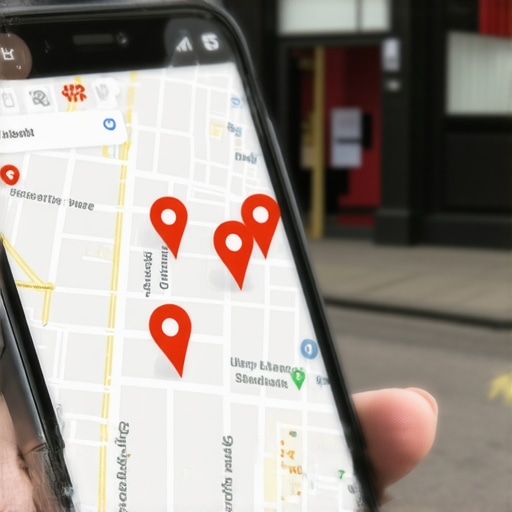
Proximity is the primary ranking signal in Local SEO. If your business name or service descriptions use inconsistent terminology, the Map Pack algorithm fails to associate your GPS pin with the user’s search intent. This leads to a centroid collapse where visibility is restricted. I look at this through the lens of a logistics manager; if the flow of data is blocked by a linguistic barrier, the entire supply chain of leads fails. You might be using is your local seo software giving you fake ranking data and seeing green circles on your heat map, but if the customer’s mobile device cannot confirm your location via consistent web signals, you are invisible to them. The physics of a three mile radius shift is brutal. One day you are the king of the neighborhood; the next, you are filtered out because your ‘LocalBusiness’ schema had a different language tag than your primary category. We call this the engagement gap, and it is the reason why your profile gets views but zero phone calls despite high impressions.
Local Authority Reading List
- Building a robust local seo framework to boost google business rankings
- Decoding the local ranking system strategies for local seo success
- Handling complex google penalties a strategic recovery plan for local brands
- The technical audit for local businesses stuck on the second page
Why your physical address is a liability
A physical storefront is only as valuable as the digital citations supporting it. Language inconsistencies across niche directories and social profiles dilute your location authority. This confusion prevents Google from verifying your service area, especially during an ownership transfer or rebranding phase. Many contractors fall into the reseller trap why generic local seo packages fail hyperlocal service businesses because these packages do not account for the microscopic math of GPS coordinate salience. They blast out citations with generic names and hope for the best. But when you are dealing with emergency seo services for sudden ranking drop issues, you realize that your physical address is being attacked by conflicting data points. If a competitor uses identifying the competitor spam tactics that push you out of the top 3, they will often target your address inconsistencies to report you for TOS violations. I have spent decades investigating map spam; the easiest way to kill a listing is to prove its data is a mess.
The hidden cost of fragmented data
Inconsistent citations lead to manual action penalties and GMB profile filters. When automated tools find mismatched business data, they flag the listing as spammy lead gen. Cleaning up historic citation spam is required to restore consumer trust and search engine visibility. If your profile is stuck in a filter for duplicated locations, you are likely suffering from brand confusion. This often happens when you have seo services to fix brand confusion from merged gmb listings that were not properly sanitized. The forensic trace of a service area polygon must be clean. If you are a plumber, and your Google Business Profile says you serve ‘Greater London’ but your Yelp says ‘SW1’, the algorithm gets a headache. It stops trying to figure out where to place your pin. This is why why your plumber map listing falls off the first page and how to anchor it requires a deep dive into every niche directory you have touched in the last ten years. You must find the junk and kill it before it kills your revenue.
“A business with inconsistent location signals across the web is treated as a high-risk entity, resulting in lower spatial confidence scores within the Local Pack.” – Vicinity Algorithm Whitepaper
How to anchor your ranking against algorithm shifts
Anchoring your rank requires a technical audit of your JSON-LD schema and NAP data. Correcting broken internal links and removing toxic backlinks ensures that Google views your business as the primary local entity. Specialized local SEO consulting is often needed for penalty recovery. When you use how to tell a real gmb seo expert from a salesman with a template, you are looking for someone who understands the math of the algorithm, not just someone who can fill out a profile. You need to look for the warning signs of a manual action penalty on your local site before the damage is permanent. Fixing how to fix broken citations that are confusing google and your customers is a manual process that requires precision. You cannot trust an AI tool to do this because AI does not understand the nuance of a local street name change or a historical landmark that serves as a local landmark. You need a human centric way to optimize for real leads. The machine might be fast, but it is often wrong about the microscopic details of your neighborhood.
The fix for broken listings and lost traffic
Recovering from a ranking drop involves a multi-step audit of your entire digital footprint. You must identify toxic links, remove competitor spam, and verify that your service area business strategy is sound. If your GMB rankings have flatlined, it is time to look at the engagement signals and user intent. Most agencies sell ‘citation blasts’ which are actually just why buying bulk citations is a recipe for ranking disaster. Instead, you should focus on how we built local backlinks using community partnerships instead of outreach. This builds real authority that the Map Pack respects. If you are regaining your map visibility after an ownership transfer, the first thing you do is audit the language. Check the old owner’s social profiles. Check the old phone numbers. One ghost from the past can haunt your current rankings for months. The logistics of a recovery are complex; you have to stop the bleeding before you can start the growth. Use a the google maps ranking checklist for profiles stuck in the fourth spot to find the one small thing that is keeping you out of the top three. Often, it is just a single word out of place.