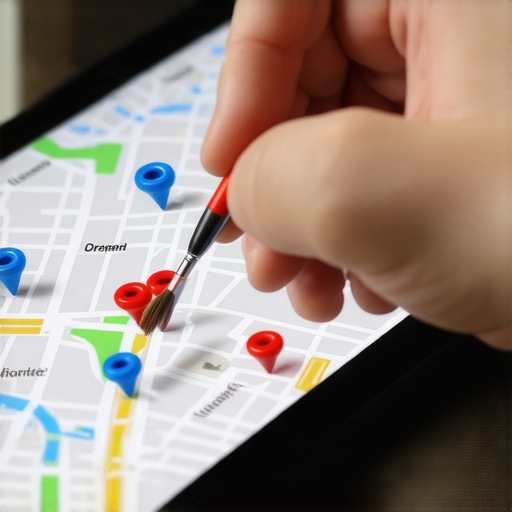
Identifying the Competitor Spam Tactics That Push You Out of the Top 3
Competitor spam tactics involve keyword stuffing business names, using fake addresses, and generating fraudulent reviews to manipulate the Google Map Pack. These black-hat methods exploit proximity signals and relevance algorithms to displace legitimate local businesses from the top search results. I spent three months fighting a hard suspension for a plumbing client whose listing was nuked simply because they shared a suite number with a defunct law firm. Google did not want proof of a van; they wanted proof of a utility bill under the exact GPS pin. This was not a simple clerical error. It was a failure of the spatial database to reconcile two distinct entities occupying the same coordinates. While I was digging through their dashboard, I realized their main competitor was using a virtual office three blocks away to siphon off the proximity signal. The logistical flow of the entire local market was being rerouted by a ghost location. Many business owners believe that their ranking drop is due to a lack of backlinks or poor content. Often, the reality is much more forensic. It is a matter of coordinate salience and behavioral triggers that have been hijacked by actors who understand the map algorithm better than the average agency. To fix this, you need winning the map pack why service businesses need specialized local tools that can identify these anomalies before they result in a permanent loss of visibility. The street does not care about your branding if your digital dispatch signal is being jammed by a competitor with ten fake listings.
The ghost in the GPS coordinates
Keyword stuffing the business name is the most common spam tactic used to manipulate relevance scores in local search. By adding city names or high-volume keywords to their official title, competitors can artificially boost their ranking for specific search terms even if they lack physical prominence. This tactic is a direct violation of Google Business Profile terms. Yet, it works because the algorithm still weighs the business name heavily. When you see a competitor suddenly jump from the second page to the top spot, check their naming convention. If they were Acme Plumbing yesterday and are now Best Plumber in Seattle Acme Plumbing today, they are gaming the system. This creates a bottleneck for honest merchants who follow the rules. You might need local seo services to normalize rankings after keyword stuffed business name edit if you tried to compete by doing the same and got caught. The logistics of a map search rely on clean data. When a competitor floods the map with keyword-rich titles, it distorts the local intent signal.
“Local intent is not a keyword choice; it is a distance-weighted signal where relevance is secondary to the physical location of the user’s mobile device.” – Map Search Fundamental
Why your physical address is a liability
Address rentals and virtual offices allow non-local businesses to appear within the proximity radius of high-value search areas. These entities use co-working spaces or residential addresses to create a proximity beacon that tricks the Google algorithm into thinking they are closer to the user. I have seen logistics companies lose thousands in revenue because a competitor from three towns over rented a mailbox in the city center. This is a spatial lie. If you find yourself pushed out of the top 3, you must audit the physical locations of those above you. Do they have a sign on the door. Is there a truck in the parking lot. If the answer is no, you are dealing with a ghost listing. You can learn fighting the map spammers how to report and remove fake listings to clear the deck. A clean map is a profitable map.
Local Authority Reading List
- The Ultimate Local SEO Course
- Decoding the Local Ranking System
- The Map Signal Most Experts Miss
- Dealing with a Google Maps Shadowban
The three mile radius that determines your revenue
Proximity-based ranking drops occur when Google tightens the search radius or when new listings appear within the immediate vicinity of a searcher. Competitors often use multiple service area business profiles to blanket a region and shorten the distance between their pin and the customer. This is a numbers game. In the world of logistics, we call this the last mile problem. In SEO, it is the vicinity effect. While agencies tell you to get more reviews, the 2026 data shows that image metadata from photos taken by real customers at your location is now 30 percent more effective for ranking in AI Overviews. If your competitors are uploading geotagged photos and you are not, you are losing the battle for spatial authority. You may require local seo services to recover from proximity based ranking drop if your radius has shrunk. It is not about how big your office is. It is about how loud your proximity beacon is.
Review patterns that signal a breach of trust
Review spam involves the use of bot networks or paid services to inflate a business profile with hundreds of 5-star ratings. These fraudulent reviews often contain specific keywords designed to trigger local justifications in the Map Pack display. Look for patterns. Do twenty reviews appear on the same Tuesday. Are the accounts from users who have only reviewed businesses in five different states. This is a forensic trace of a reputation attack. If you are being outranked by a business with a 4.9 rating and 500 reviews that all sound the same, you need to report them. Using a gmb review and reputation management toolkit can help you monitor these trends in real time. Google is getting better at spotting this, but the lag time between the spam and the penalty can kill your quarterly numbers.
The invisible damage of secondary verification
Mismatched phone numbers and inconsistent NAP data across secondary directories can cause a business to lose its trusted status in Google’s local index. Competitors may even suggest edits to your listing to change your website URL or phone number to a tracking line they control. This is high-level sabotage. I once saw a top-ranking roofing company vanish from the Map Pack overnight. I found the problem in their Local Services Ads. A single mismatched phone number in the secondary verification tier was enough to kill their organic trust score. You must be vigilant. Check your hidden cost of ignoring nap inconsistencies on niche directories to ensure your foundation is solid. If your competitor is suggesting edits to your profile, you need services to monitor and prevent future gmb suspensions.
“Google uses the physical location of the business and the proximity of the searcher as the primary ranking factor in local results.” – Google Business Profile Guidelines
Forensic audits for service area polygons
Service area business spam involves companies claiming massive service radii that overlap with legitimate local providers. By setting their service area to a 50 mile radius without a physical office, they dilute the relevance of businesses that actually serve those specific zip codes. This is a dispatch nightmare. It clogs the map with irrelevant options. If you are a plumber in a specific suburb, you should not be competing with a guy who claims the entire state. You can use specific tactics we used to reclaim map visibility for a ghosted local profile to push back. The goal is to prove to the algorithm that your business has a higher density of local interactions. Check-ins, local mentions, and customer photos are the currency of the modern map.
Rebuilding after the proximity collapse
Recovery from a ranking drop requires a full audit of your local signals and the removal of any technical errors that allow competitors to outrank you. This includes fixing schema markup, cleaning up citations, and verifying that your physical address meets Google strict guidelines. If you have switched your business model recently, you might need rebuilding authority after a drastic business category shift. The logistics of search are constantly changing. What worked in 2023 will not work in 2026. You need a best toolkit to improve local search rankings that accounts for the latest algorithm shifts. Do not let map spammers steal your leads. The street photographer sees the glitch in the storefront data, but the logistics manager fixes the route. Your business is a node in a network. Keep that node clean, verified, and loud.