
Why Your HVAC Map Listing Is Getting Outranked by One-Man Vans
Why Your HVAC Map Listing Is Getting Outranked by One-Man Vans (and How to Take Back the Top 3)
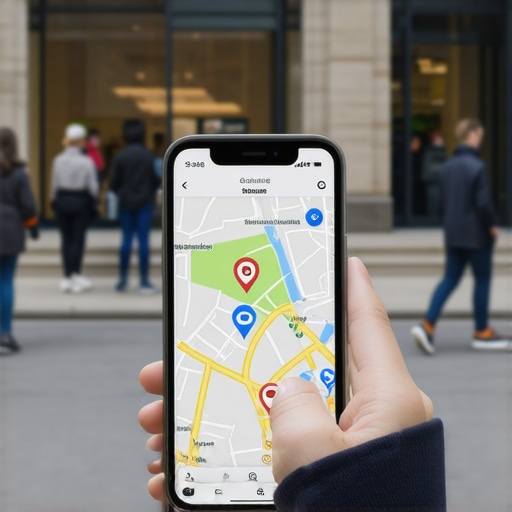
It is a scene that plays out every morning in service areas across the country. You walk into your office, look out at your fleet of twenty pristine, wrapped trucks, and check your lead dashboard. The numbers are soft. You open Google Maps and search for “AC repair near me.” There you are – sitting at #5 or #6, buried beneath the “More Businesses” fold. And who is at #1? It’s a guy named “Dave’s Reliable Air,” a one-man operation with a single beat-up van and forty reviews to your five hundred.
It feels like a personal insult. You’ve spent decades building a brand, millions on payroll, and thousands on a “perfect” website. Yet, in 2026, the digital landscape has shifted so violently that your size has become your greatest liability. The reality is simple: Google is no longer ranking websites first; it is ranking local presence.
If you are frustrated by this, you aren’t alone. Many established HVAC owners are currently suffering from what I call the “Invisible Fleet” syndrome. You have the capacity to serve the whole county, but Google’s algorithm thinks Dave is more “relevant” to the person searching three blocks away from his house. To understand why this is happening, you need to look at Why Your Competitor Ranks Higher with Fewer Reviews and Half the Effort. It isn’t luck; it’s a calculated exploitation of how google business profile seo works today.
The Proximity vs. Prominence Paradox in 2026
For years, the local SEO world was built on three pillars: Relevance, Distance, and Prominence. In the early 2020s, Prominence (how big and well-known your brand is) could often overcome a lack of Proximity. If you were the biggest HVAC company in the city, Google would show you to someone ten miles away. That era is officially over.
In 2026, Google’s machine learning models, specifically those governing the Local Pack, have pivoted toward a “Hyper-Local Relevance” model. The algorithm now prioritizes Proximity above almost everything else for Service Area Businesses (SABs). Google’s goal is to provide the user with the most “immediate” solution. When Dave’s van is parked in a residential driveway completing a job, and he updates his status, Google’s AI interprets that as a high-intent local signal.
This creates a paradox: Your “Prominence” (your 500 reviews and big warehouse) is being treated as static noise, while the one-man van’s “Proximity” is treated as a dynamic, real-time signal. If you want to fight back, you need a sophisticated google maps ranking service that understands how to spoof these signals through legitimate activity and technical optimization. You cannot rely on your 2015 SEO strategy to win a 2026 war.
The 2026 algorithm also utilizes “Neural Matching” to understand the nuances of search intent. It isn’t just looking for the keyword “HVAC”; it’s looking for the business that most frequently interacts with customers in a specific zip code. If your big brand is managed from a central headquarters 20 miles away, and you aren’t feeding the algorithm local data, you are essentially invisible to the neighborhoods that matter most.
The 3 Pillars of the “One-Man Van” Success
Recent research into 27 #1-ranked HVAC companies – many of them small, nimble operations – revealed a shocking trend. These companies didn’t have the biggest budgets or the most backlinks. Instead, they focused on three specific areas that large companies often ignore due to “corporate bloat.” These are the exact methods used in How Contractors Are Stealing the Top 3 Map Spots Without Paid Ads.
1. Fully Built-Out Services
Most big HVAC companies set their primary category to “HVAC Contractor” and call it a day. The “one-man van” winner goes deeper. They don’t just list a category; they build out every single service item within the Google Business Profile (GBP) dashboard.
- AC Repair (with a 300-word description and pricing)
- Emergency Furnace Repair
- Ductless Mini-Split Installation
- Indoor Air Quality Testing
By being hyper-specific, they capture “long-tail” local searches that your broad profile misses.
2. Consistent Activity (The “Heartbeat” Signal)
Google loves a business that is “alive.” Small owners often manage their own profiles, uploading a photo of a rusted capacitor they just replaced or a finished install every single day. Large companies often outsource this to agencies that post generic “Happy First Day of Autumn” graphics once a week. In 2026, generic content is dead. Google’s Vision AI analyzes the content of photos. A photo of a real technician in a real local basement carries 10x the ranking weight of a stock photo. This is a core component of google business profile seo.
3. Steady Review Growth (Velocity over Volume)
You might have 500 reviews, but if you got 400 of them three years ago, your “Review Velocity” is stagnant. The one-man van getting 3 high-quality, keyword-rich reviews every week is signaling to Google that they are currently the most popular choice in the area. It’s about the now, not the then.
Why Your “Big Brand” Website is Holding You Back
This is the hardest pill for most established owners to swallow: Your $20,000 custom website might be the reason you’re losing on Maps. We’ve seen data suggesting that top performers in the Map Pack often have “lower-quality” or simpler websites compared to the big players. Why?
Because the big brand website is often over-optimized for “National” or “City-Wide” SEO, which dilutes the local signal. A massive site with 500 pages can actually confuse Google’s local spider. Meanwhile, the small guy has a fast, mobile-first site that focuses exclusively on three zip codes. Google sees this hyper-focus and rewards it with google business profile ranking dominance.
In 2026, Google treats the Google Business Profile as the “New Homepage.” Many users never even click through to your website; they click the “Call” button or “Directions” button directly from the Map Pack. If you are pouring all your money into your website’s UI/UX but neglecting your google business profile optimization, you are polishing the brass on a sinking ship. You need to ensure your profile is the primary conversion tool, with the website acting only as a secondary validation source.
The Technical “Signal” Audit for HVAC Owners
If you want to reclaim your territory, you need to stop thinking like a “Big Brand” and start thinking like a “Local Authority.” Use this checklist to perform a technical audit of your local presence. If you don’t have the time to do this manually, utilizing local seo tools can automate the heavy lifting.
- Local Schema Markup: Does your website have LocalBusiness and HVACBusiness Schema that points directly to your GBP CID URL? In 2026, this “handshake” between your site and your profile is mandatory.
- NAP Consistency (The 2026 Version): It’s no longer just about Name, Address, and Phone. It’s about “Entity Consistency.” Does your brand appear the same way on Yelp, Angi, and the BBB as it does on Google?
- Niche Citations: Stop buying generic citations. You need links from local hardware stores, local community blogs, and HVAC-specific directories.
- The Audit Checklist: For a deeper dive, see The Audit Checklist for Profiles Stuck Outside the Top 3.
Another critical factor is the “Service Area” settings. Many large companies try to claim a 50-mile radius. This is a mistake. By trying to be everywhere, you end up being nowhere. The algorithm in 2026 punishes “over-extended” service areas. If you want to rank in a specific high-value suburb, you may need to tighten your service area or create specific “Local Geo-Pages” on your site that are tightly linked to your GBP.
2026 Algorithm Shifts: Interaction & Behavioral Signals
The biggest change in the 2026 local algorithm is the heavy weighting of **Behavioral Signals**. Google is no longer just looking at what you say about yourself; it is looking at how users interact with your listing. This is often referred to as the “Engagement Gap.”
Google tracks:
- Direction Requests: Even if you are a Service Area Business, people looking up how far you are from them matters.
- Dwell Time: How long does a user stay on your GBP looking at photos or reading Q&As?
- Click-to-Call Rate: If 100 people see your listing and 10 click “Call,” but 100 people see Dave’s listing and 20 click “Call,” Dave wins – every single time.
The “one-man van” often wins here because their profile is more “human.” It’s Dave’s face, Dave’s dog in the van, and Dave’s personal responses to reviews. This high engagement tells Google that Dave is the preferred choice. If your profile looks like a corporate brochure, users will scroll past it, killing your CTR (Click-Through Rate) and dragging your rankings down. For more on this, read The Engagement Gap: Why Your Profile Gets Views But Zero Phone Calls.
Conclusion & Action Plan
The “Map Pack” war of 2026 is not won by the company with the most trucks; it is won by the company that provides the most relevant, active, and engaging local signal. Your size should be an advantage, giving you the resources to produce more content, gather more reviews, and optimize more aggressively than any one-man shop ever could. But if you remain stagnant, the “one-man van” will continue to eat your lunch.
Your action plan is clear:
- Audit your GBP for “Service” completeness.
- Implement a daily “Real-Photo” strategy.
- Fix your technical “Entity” signals with SEO Viper Tools.
- Shorten your service area to dominate core neighborhoods first.
Don’t let your legacy brand become a digital ghost. It’s time to take back the Top 3 and show Google – and your customers – who the real local authority is. Start by Unlocking the Local SEO Blueprint for Dominating Google Rankings and stop the bleed today. If you need professional intervention, consider hiring a dedicated google maps ranking service to navigate these 2026 algorithm shifts for you.