
How Contractors Are Stealing the Top 3 Map Spots Without Paid Ads
How Contractors Are Stealing the Top 3 Map Spots Without Paid Ads
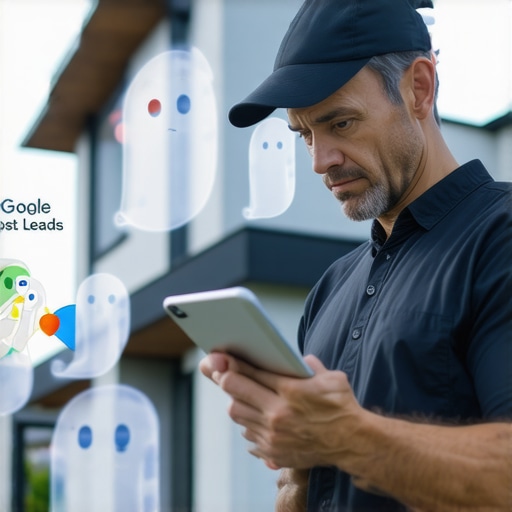
If you are a home remodeler, plumber, or roofing contractor, you already know the frustration of seeing your competitors dominate the top of the search results while your phone stays silent. You’ve likely been told that the only way to get to the top is to “pay to play” through Google LSA or traditional PPC ads. But there is a silent revolution happening in local search. Smart contractors are no longer renting their leads from Google; they are owning them through advanced google business profile seo.
In my three-plus years as a local SEO specialist specifically for the home remodeling and construction niche, I have seen the landscape shift. We are moving into a 2026-ready environment where old-school tactics – like simply stuffing your business name with keywords – no longer work. Today, “stealing” those coveted Top 3 Map Pack spots requires a sophisticated understanding of behavioral signals and interaction proof. If you aren’t in that “3-Pack,” you are effectively invisible to 85% of your potential customers.
This guide will pull back the curtain on the exact system we use to help contractors bypass the “Ad Trap” and build long-term, organic authority that competitors can’t simply outspend. If you want to stop being a “best-kept secret” and start being the local authority, you need to understand the new rules of the Map Pack.
Before we dive into the technical steps, it’s vital to understand the “85% Rule.” Research consistently shows that over 85% of all users interact exclusively with the top three businesses displayed on Google Maps. If you are ranking at #4, you might as well be on page ten. To get there, you need to master the Unlocking the Local SEO Blueprint for Dominating Google Rankings.
The Myth of Paid Ads vs. Organic Map Authority
Many contractors fall into the trap of believing that Google Ads are the only way to generate immediate leads. While ads can provide a quick spike, they are “rented” traffic. The moment you stop paying, your lead flow vanishes. Furthermore, modern consumers are becoming increasingly “ad-blind.” They recognize the “Sponsored” tag and often skip directly to the organic Map Pack because they perceive these businesses as having earned their spot through reputation rather than a credit card.
Organic dominance in the Map Pack is “owned” authority. It is a sustainable asset that works for you 24/7. While your competitors are fighting over rising Cost-Per-Click (CPC) rates, contractors utilizing a high-level google maps ranking service are capturing the highest-intent leads for free. These organic results carry a higher level of trust. When a homeowner sees your business in the Top 3 with 100+ five-star reviews, the psychological barrier to calling you is significantly lower than it is for a “Sponsored” pin.
Google’s algorithm for local search is built on three core pillars: Proximity (how close you are to the searcher), Relevance (how well your profile matches the search query), and Prominence (how well-known your business is online). While you can’t change your physical location (Proximity), you have total control over Relevance and Prominence. This is where the “long game” of organic ranking becomes your most powerful competitive advantage.
Step 1, The Foundation: Advanced Profile Optimization
Most contractors think they have “optimized” their profile because they filled out their name and uploaded a logo. In 2026, that is just the bare minimum. To rank higher on google maps, you must move beyond basic setup into strategic data alignment.
The first step is category selection. Google allows one primary category and up to nine secondary categories. Most remodelers make the mistake of only choosing “General Contractor.” To maximize your reach, you must select specific secondary categories like “Bathroom Remodeler,” “Kitchen Remodeler,” or “Deck Builder” to signal relevance for specific high-value searches. However, you must ensure these categories align with the services listed on your website to avoid “relevance friction.”
Next, focus on the “Services” section. This isn’t just a list; it’s a keyword goldmine. Each service should have a detailed description that explains what you do and where you do it. This is where professional google business profile optimization comes into play. By using keyword-rich (but not spammy) descriptions, you feed Google’s AI the exact data it needs to match you with local queries. For more on the technical side of this, check out The Simple Schema Fix That Helps Contractors Win the Map Pack.
Step 2, The Visual Edge: Geo-Tagged Photos & 2026 Video Signals
Google is no longer just a text-based search engine; it is a visual processing engine. For contractors, your photos are your proof of work and your proof of location. The 2026 algorithm shifts have placed a massive premium on what we call “Verified Video Signals.”
While old-school SEO focused on geo-tagging photo metadata (EXIF data), Google’s AI is now smart enough to recognize landmarks, street signs, and even the specific architecture of a neighborhood within your photos. When you upload a high-quality photo of a kitchen remodel in a specific suburb, Google’s “Vision AI” confirms your proximity to that area. This builds a “Proximity Cluster” that expands your ranking radius.
The real “secret weapon” for 2026 is short-form video. Uploading 30-second clips of a job site walkthrough or a “before and after” directly to your Google Business Profile (GBP) provides “Interaction Proof.” These videos keep users on your profile longer, which signals to Google that your content is valuable. If you want to know why your current strategy might be failing, read Why Your Local Ranking System Ignores Verified 2026 Video Signals.
Step 3, Review Velocity and the “Interaction Gap”
We all know reviews are important, but most contractors focus on the wrong metric. It’s not just about the total number of reviews; it’s about **review velocity** and **keyword density within the reviews**. If you got 50 reviews three years ago and haven’t received any since, Google views your business as stagnant.
To rank google business profile listings at the top, you need a steady stream of fresh feedback. More importantly, you need reviews that mention your services. A review that says “Great job!” is good, but a review that says “Best kitchen remodeler in [City Name], they handled the cabinets and flooring perfectly” is SEO gold. Google scans these reviews to verify that you actually do what you say you do.
Then there is the “Interaction Gap.” This is a metric Google uses to see how many people who view your profile actually take action. If 1,000 people see your listing but only 2 people click “Call,” Google assumes your business is irrelevant or untrustworthy and will drop your rank. You can use advanced GBP ranking tools to monitor these interaction rates and identify where you are losing potential leads. Understanding The Interaction Gap Killing Your Local Ranking System Clicks is essential for maintaining a Top 3 spot.
Step 4, Technical Local SEO: Schema & Hyperlocal Citations
Behind every top-ranking Map listing is a foundation of technical SEO that “connects the dots” for Google. One of the most overlooked aspects is local business schema. This is a specific piece of code on your website that tells Google exactly who you are, what you do, and where you are located in a language the search engine understands perfectly.
While NAP (Name, Address, Phone) consistency across the web used to be the “holy grail” of local SEO, the algorithm has evolved. We are now in the era of “Brand Mention Signals.” Google is looking for mentions of your business on authoritative, local platforms. This could be a neighborhood blog, a local news site, or even a sponsorship of a local Little League team. These “hyperlocal citations” carry much more weight than a generic directory listing on a site no one visits.
To dominate, you must stop wasting time on low-value directories. Instead, focus on building a network of local backlinks that prove your prominence in your specific service area. For a deeper dive into which citations actually move the needle, see Stop Using Citations That Your Local Ranking System Actually Ignores. Utilizing professional google maps seo tools can help you identify which local sites are providing the most “link juice” to your competitors.
The Contractor’s Secret Weapon: Local SEO Automation
In the 2026 landscape, trying to manage your local SEO manually is like trying to build a house without power tools. It’s technically possible, but you’ll be outpaced by anyone who has the right equipment. To stay in the Top 3, you need to know exactly how you are performing across every square mile of your service area.
This is where a **google maps rank tracker** becomes indispensable. Rankings are not static; you might be #1 when someone searches from your office, but #10 when they search from a suburb five miles away. Specialized software like SEO Viper Tools allows you to see a “grid view” of your rankings, showing you exactly where your “blind spots” are. This level of data allows you to adjust your strategy – perhaps by posting more geo-tagged photos from those weak areas – to “fill in” the map.
Furthermore, using a google business profile audit tool can reveal “leaks” in your strategy. It can highlight missing attributes, identify if your competitors are using “ghost categories” to outrank you, and track your review velocity compared to the market leaders. In the hands of a specialist, these local seo tools transform a “guessing game” into a predictable lead-generation machine. If you are serious about growth, you are no longer looking for a “tactic”; you are looking for a **gmb ranking service** that provides a comprehensive system.
Conclusion & Action Plan: Your Roadmap to Map Pack Dominance
The “secret” to stealing the Top 3 spots isn’t a secret at all – it’s a commitment to a system. While your competitors are busy chasing the latest “hack” or pouring money into expensive ads, you can win by focusing on the fundamentals of the 2026 algorithm: Proximity clusters, interaction proof, and technical authority.
Your Action Plan:
- Audit Your Categories: Ensure your primary and secondary categories are laser-focused on your most profitable services.
- Fix Your Visuals: Start uploading weekly job site photos and short “Verified Video” clips to boost interaction.
- Automate Your Tracking: Stop guessing where you rank. Use a professional rank tracker to see your real-world visibility.
- Close the Interaction Gap: Optimize your profile description and “Services” section to turn viewers into callers.
Don’t let another month go by where your competitors “steal” the leads that should be yours. The Map Pack is the most valuable real estate on the internet for a contractor. It’s time you claimed your spot. For more information on building a long-term strategy, read about Building a Robust Local SEO Framework to Boost Google Business Rankings.