
How to Build Genuine Map Authority Without Buying Fake Signals
How to Build Genuine Map Authority Without Buying Fake Signals
In the high-stakes world of local search, the allure of the “quick fix” is a siren song that has led many well-intentioned business owners to ruin. As a Local SEO Strategist with over 15 years in the trenches, I have seen every “black hat” trick in the book – from review farms in distant time zones to CTR bots that mimic human behavior with terrifying (yet detectable) precision. But as we move into 2026, the landscape has shifted fundamentally. The era of tricking the algorithm is over. Today, building google business profile seo isn’t about how many fake signals you can buy; it’s about how much genuine authority you can prove to an AI-driven ecosystem that is increasingly skeptical of everything it sees.
Section 1: The Illusion of Speed – Why Fake Signals are a 2026 Death Sentence
The “get ranked fast” industry is currently facing a reckoning. For years, unscrupulous agencies sold “profile stacking” and “CTR manipulation” as secret weapons. In 2026, these are no longer secrets; they are footprints. Google’s AI-driven spam filters have evolved to recognize the difference between a genuine customer journey and a bot-driven interaction. When a profile receives 50 reviews in 48 hours from accounts with no geographic history in that city, it doesn’t just trigger a manual review – it triggers an immediate algorithmic suppression.
Furthermore, the regulatory environment has caught up with digital deception. The FTC’s finalized rule cracking down on fake reviews and deceptive advertising has changed the stakes. We are no longer just talking about a “suspended profile”; we are talking about legal liability and massive fines for businesses that engage in the purchase of fraudulent signals. If you are still looking for a google business profile seo shortcut, you are building your house on a sinkhole. The “Interaction Gap” – where a profile shows high impressions but zero actual calls – is the first red flag Google uses to identify manipulated rankings. If your data doesn’t match real-world human behavior, your visibility will vanish overnight.
Before you invest another dollar in “boost” services, ask yourself: Is your strategy built to last, or is it built to fail the next filter update? Most businesses find that Why Your 2026 Local Ranking System Fails the Interaction Test because they prioritized velocity over veracity.
Section 2: Proximity, Relevance, and Prominence – The Holy Trinity Reimagined
To rank google business profile assets effectively, we must return to the fundamentals, but with a modern twist. Google’s local algorithm still rests on the pillars of Proximity, Relevance, and Prominence. However, the definition of “Prominence” has undergone a radical transformation. It is no longer just about how many times your business name appears on the web; it is about your “real-world relevance.”
Google now uses behavioral loops as proof of existence. If the algorithm sees that people are searching for your brand name specifically, clicking your listing, and then – crucially – initiating a “behavioral loop” (such as requesting directions or making a call), your prominence score skyrockets. This is why a small, well-loved local cafe can outrank a massive franchise with a million-dollar SEO budget. The cafe has genuine human interaction that suggests it is a pillar of the community.
Prominence is now a measure of trust. Are you mentioned on local news sites? Do community blogs link to you? Does Reddit discuss your services in a local context? These are the signals that cannot be faked by a bot in a server farm. When you focus on building this kind of authority, you aren’t just optimizing for a search engine; you are optimizing for the human beings who live in your service area. For a deeper look at how these pillars interact, see our guide on Decoding the Local Ranking System: Strategies for Local SEO Success.
Section 3: The “Behavioral Loop” Strategy – Forcing Google to Trust You
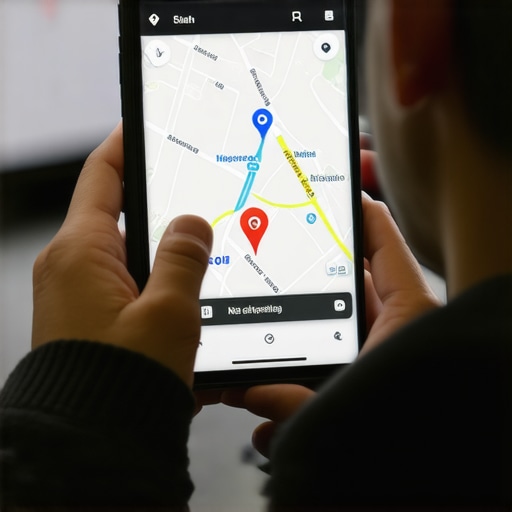
The most powerful signal in 2026 isn’t a backlink or a keyword-stuffed description; it’s the “Navigating to your place” signal. When a user opens Google Maps, types in your business name, and hits “Start” on navigation, it tells Google something profound: this business is a real destination. It exists in physical space, and people are willing to expend fuel and time to get there. This is the ultimate google maps ranking service signal that no bot can replicate convincingly over time.
To force Google to trust you, you must encourage these behavioral loops. This involves moving beyond static citations and into active engagement.
- Landmark Association: Mention nearby landmarks in your GBP posts. “Located just two blocks south of the historic City Hall on Main Street.” This helps the AI associate your coordinates with known, high-authority entities.
- Hyperlocal Content: Use specific street names and neighborhood identifiers in your service descriptions. Don’t just say “Plumber in Chicago”; say “Emergency plumbing repairs for homeowners in Logan Square and Avondale near the Kennedy Expressway.”
- In-Person Incentives: Offer a “check-in” discount. When users open their app to check in or leave a photo while at your physical location, the GPS data confirms your legitimacy.
By creating these real-world touchpoints, you trigger The Specific Map Signal That Forces Local Leads to Call You First, creating a virtuous cycle of visibility and trust.
Section 4: Technical Foundation – Beyond the NAP (Name, Address, Phone)
While behavioral signals are the engine, your technical setup is the chassis. Many businesses fail because their foundation is cracked. Beyond the basic NAP consistency, you must look at “Intent Signals.” This starts with your primary category. Choosing “Lawyer” is a mistake if you are actually a “Personal Injury Attorney.” The more specific your primary category, the more relevant you are to high-intent searches.
Next, refine your service areas. A common mistake is over-extending your reach. If you are a dentist in downtown Austin, claiming you serve the entire state of Texas doesn’t help you rank; it dilutes your local relevance. Focus your service area on where your customers actually live. Furthermore, your business description should not be a sales pitch; it should be a data-rich summary of what you do, who you serve, and where you are located. Using local seo software can help you audit these technical elements to ensure you aren’t missing critical intent markers.
Finally, do not ignore Local Schema. This is the “translator” that tells Google’s bots exactly what your human-readable text means. For professional services, specific schema types are non-negotiable. For instance, check out The Specific Map Schema Tactics That Actually Generate Lawyer Leads to see how structured data can bridge the gap between your website and the Map Pack.
Section 5: The 2026 Review Strategy – Quality Over Quantity
The days of needing “the most reviews” to rank are gone. Google has implemented sophisticated “Review Filtering” that ignores generic “Great service!” 5-star ratings from accounts with no history. In 2026, a single detailed review from a “Local Guide” who has a history of reviewing businesses in your city is worth more than fifty 5-star ratings from new or inactive accounts. This is where many businesses get caught using a google maps rank tracker – they see their rankings drop even as their review count goes up, because the quality of those reviews is plummeting.
To build genuine authority, you need “Contextual Reviews.” These are reviews where the customer mentions the specific service they received and the location. For example: “The team fixed my burst pipe in the West End neighborhood within an hour.” This review contains a service keyword (fixed burst pipe) and a location keyword (West End). Google’s NLP (Natural Language Processing) extracts this data to confirm your expertise and geographic reach. If you are missing these nuances, you are likely failing the 6 Review Signal Tests Missing From Your 2026 Local SEO Course.
Section 6: Hyperlocal Content & Backlinks – Building Community Authority
To truly dominate the local map pack seo, you must build a “moat” around your business. This moat is constructed from hyperlocal content and backlinks. Most SEOs focus on high-DR (Domain Rating) links from national sites, but for a local business, a link from the neighborhood Little League team’s website or a local church bulletin is often more powerful. Why? Because it places you firmly within a specific geographic cluster.
Hyperlocal content involves writing about things that only a local would know.
- Blog about local events you sponsored or attended.
- Create “Best of [Neighborhood]” guides that include other non-competing local businesses.
- Mention local street closures or community projects that affect your area.
When you consistently produce content that mentions local landmarks, street names, and community events, you signal to Google that you are a local fixture. This is the essence of Unlocking the Local SEO Blueprint for Dominating Google Rankings. It’s not about being the biggest business; it’s about being the most “local” business.
Section 7: Conclusion – The Path to #1
Building genuine map authority is a marathon, not a sprint. The temptation to buy fake signals is understandable when you are struggling to be seen, but the risks in 2026 far outweigh the rewards. By focusing on the Behavioral Loop, technical precision, and hyperlocal relevance, you create a profile that is not only “optimized” but truly authoritative. This is a system that resists algorithm updates because it is based on the one thing Google values most: providing the user with the most trustworthy, relevant local solution.
Stop chasing the “hack” of the week and start building a sustainable asset. Use professional grade tools like SEO Viper Tools to monitor your progress and stay ahead of the competition. If you’re ready to stop guessing and start winning, it’s time to enroll in The Ultimate Local SEO Course: Elevate Your Google Business Visibility. The future of local search belongs to those who build for the long term.